

2026 Rental Scams Are Smarter
By James Marszalek, Owner & Designated Broker
Scammers target Tacoma, Lakewood, Lacey, Olympia, Yelm, Puyallup, DuPont, Spanaway, and Roy
Finding a rental home near Joint Base Lewis-McChord (JBLM) can already feel stressful.
Military families may be dealing with Permanent Change of Station (PCS) timelines, out-of-state searches, temporary lodging costs, and pressure to secure housing before arrival.
Civilian renters may be relocating for work, school, family needs, or lifestyle changes, often while trying to understand a competitive South Sound rental market from a distance.
Scammers know this.
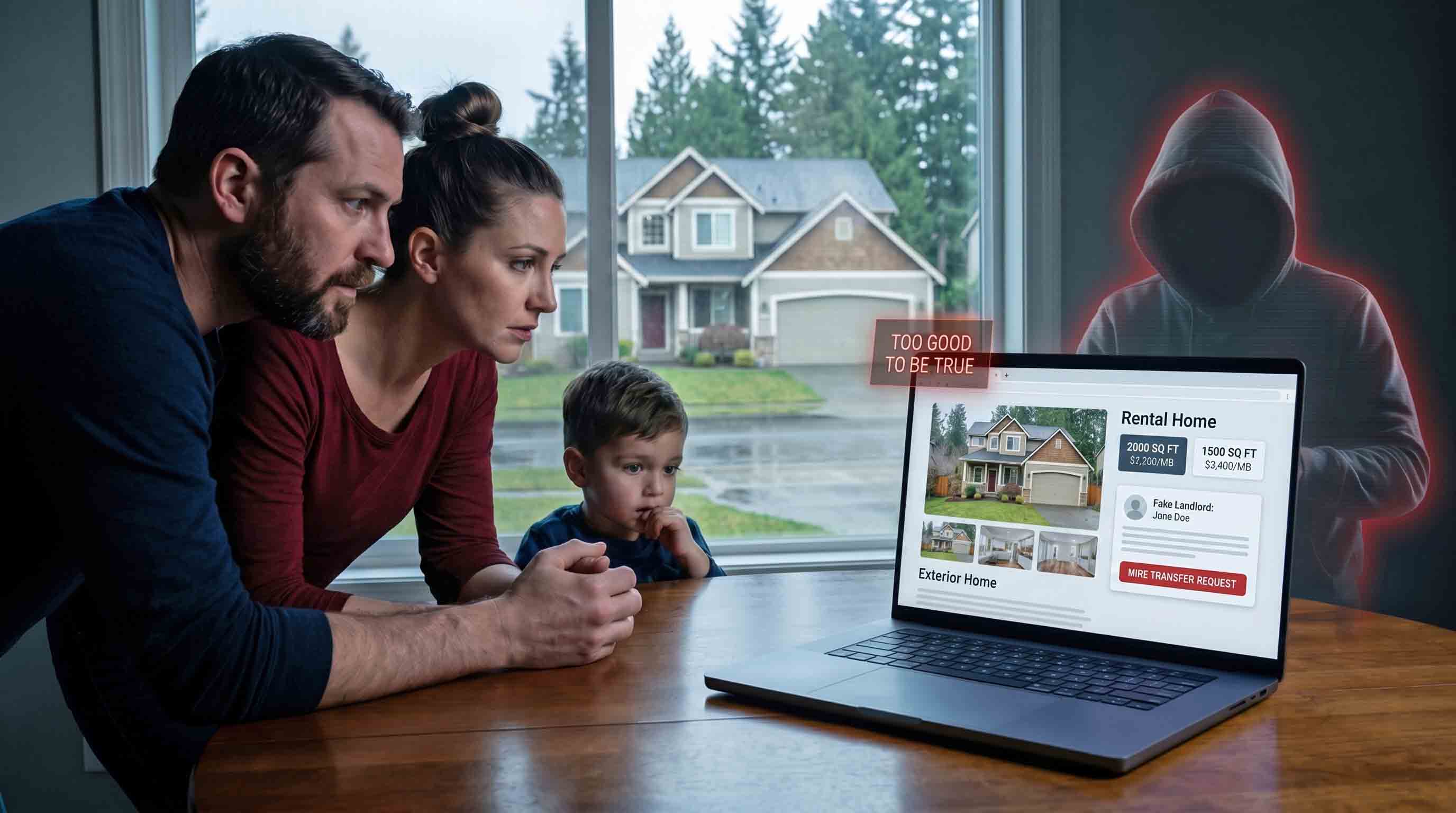
They create fake rental listings that look real, copy photos from legitimate homes, price the property just low enough to attract attention, and pressure renters to send money before verifying who actually controls the property.
The Federal Trade Commission reported that consumers filed nearly 65,000 rental scam reports from January 2020 through June 2025, with about $65 million in reported losses and a median reported loss of $1,000. The FTC also noted that these numbers likely represent only a fraction of the real harm because many scams are never reported to a government agency.

That national data matters in the JBLM area because many renters here search remotely, rely on Facebook groups or Craigslist, and make decisions under time pressure. In the FTC’s rental scam analysis, about half of reported rental scams in the 12 months ending June 2025 began with a fake ad on Facebook, and another 16% began on Craigslist.
Contents
- Decision Snapshot
- Why JBLM-Area Renters Are Targeted
- What the Data Says About Rental Scam Risk
- The Most Common Rental Scams in 2026
- Newer Scam Tactics Renters Should Watch For
- Rental Scam Red Flags
- How Military Families Can Protect Themselves During PCS
- How Civilian Renters Can Protect Themselves
- What to Do Before Sending Money
- How Operation Red Dot Helps Renters Avoid Scams
- Helpful Resources
- Final Thoughts
Decision Snapshot
Before sending money for a JBLM-area rental, slow down if:
- The rent is far below similar homes nearby
- The “owner” refuses to show the property
- You are asked to pay through wire transfer, gift cards, crypto, Zelle, Cash App, Venmo, or another informal method
- The listing appears on multiple sites with different prices or contact information
- You are asked to pay before signing a lease
- The property manager, owner, or company cannot be verified
- The person pressures you because “many other people are interested”
A legitimate rental process should include clear communication, verified property control, written application steps, a real lease, and payment instructions that match the verified property manager or owner.
Take the target off your back! Contact Operation Red Dot first!
Why JBLM-Area Renters Are Targeted
The JBLM area is a natural target for rental scammers because people move here constantly.
Military renters often arrive from another state and may not know the difference between Tacoma, Lakewood, Lacey, Olympia, Yelm, Puyallup, DuPont, Spanaway, Graham, University Place, and nearby South Sound communities.
Civilian renters may also be unfamiliar with normal rents, commute patterns, neighborhood differences, school zones, or standard rental procedures.
That creates an opportunity for scammers to copy a real listing, change the contact information, and pretend to be the owner or property manager. The FTC warns that fake listings often copy information from legitimate listings, then redirect renters to the scammer instead of the real landlord.
What the Data Says About Rental Scam Risk
There does not appear to be a clean public dataset showing exact rental scam losses for Tacoma, Pierce County, Thurston County, or the JBLM area specifically.
But the available data still shows why this is a serious local concern.
Nationally, rental scams have caused tens of millions of dollars in reported losses since 2020, with many scams starting on the exact platforms that relocating renters commonly use, especially Facebook and Craigslist.
That matters locally because JBLM-area renters often search from outside Washington before they can physically visit a home. A military family moving from another state may be trying to secure housing before arrival. A civilian renter relocating for work may be trying to understand the South Sound market from a distance. Both groups are vulnerable to fake listings that look legitimate online.
JBLM’s own Housing Services Office also provides housing support and rental scam guidance for service members, reinforcing that scam prevention is a real concern for incoming military renters and families.
The Most Common Rental Scams in 2026
Fake Listings Copied From Real Homes
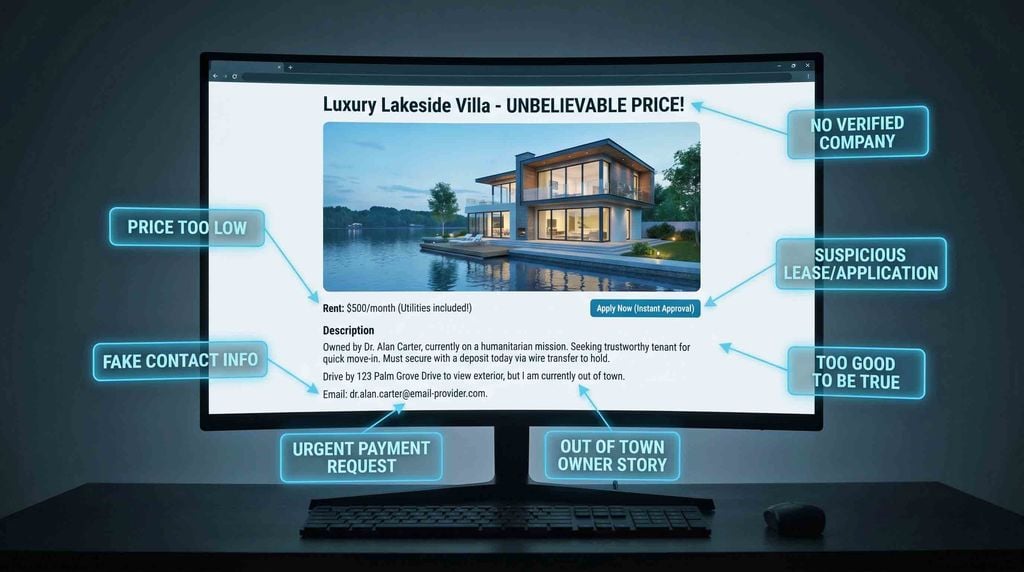
This remains one of the most common scams.
A scammer copies photos from a legitimate listing and reposts the home with:
- Lower rent
- Different contact information
- A fake owner story
- Pressure to send money quickly
These fake rental listings can appear on Facebook Marketplace, Craigslist, rental websites, and local housing groups.
“I’m Out of Town, But You Can Drive By”
A scammer may claim they are deployed, traveling, working overseas, or unable to meet in person.
They may tell you to:
- Drive by the home
- Look through the windows
- Send money to hold the property
- Wait for keys after payment
That is a major warning sign.
Fake Property Manager or Fake Owner
Some scammers pretend to represent a real company.
They may use:
- Copied logos
- Similar-looking business names
- Fake email addresses
- Stolen listing photos
- Fake leases or application forms
Always verify the company through its official website, public phone number, and business email.
Deposit Before Lease Scam
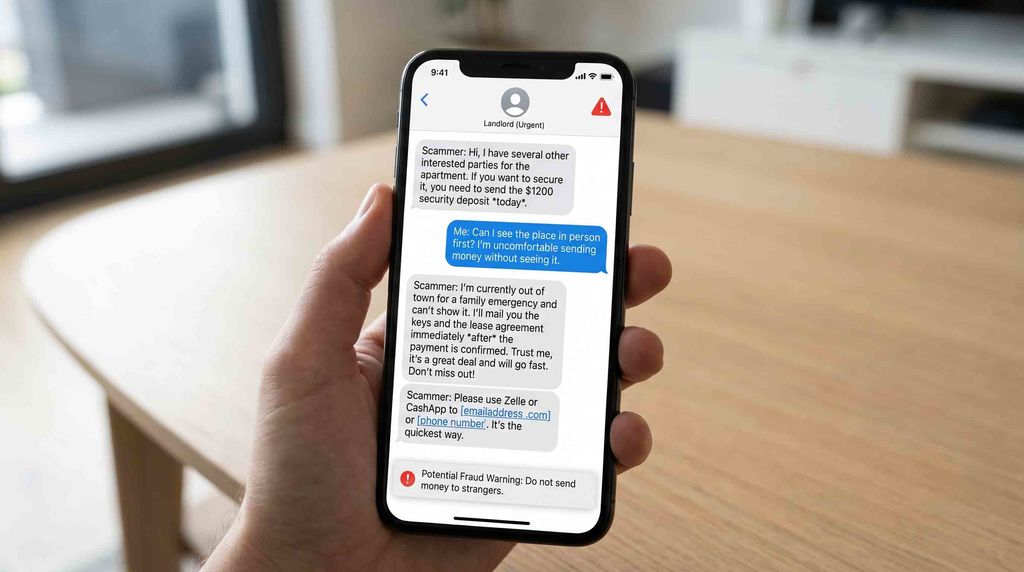
A scammer may ask for an application fee, holding deposit, first month’s rent, or security deposit before proving they control the property.
A real rental may move quickly, but money should not be sent before the process is verified.
New Scam Tactics Renters Should Watch For
Fake Credit Check Links
Some scammers tell renters they must prove they are creditworthy by sending screenshots of credit scores or clicking a link for a low-cost credit check. The FTC warns that these links may enroll renters in paid subscriptions or help scammers make money through affiliate schemes.
Identity Theft Applications
Some fake landlords collect Social Security numbers, driver’s license photos, pay stubs, bank information, or other personal details through fake rental applications. In these cases, the goal may be identity theft, not just stealing a deposit.
Self-Guided Tour Scams
Some scammers copy listings from companies that use self-tour systems, then send a renter a lockbox code or instructions that make the scam feel legitimate. The FTC specifically warns that scammers may use self-guided tour access to convince renters the fake listing is real.
AI-Enhanced Listings
In 2026, fake listings may look more polished than before.
Scammers can use AI tools to create professional descriptions, clean messages, fake owner stories, and convincing replies. That makes old warning signs, like poor grammar alone, less reliable.
Rental Scam Red Flags
Be cautious if you see:
- Rent far below similar JBLM-area homes
- A landlord who will not meet, video call, or verify access
- Pressure to pay immediately
- Requests for gift cards, crypto, wire transfers, Cash App, Venmo, or Zelle
- No formal lease
- No screening process
- No verifiable owner or property management company
- Multiple listings for the same home with different prices
- A property listed for sale elsewhere but advertised as a rental
- Requests for personal information too early
The FTC recommends searching the rental address online, comparing nearby rents, watching for different prices or contact information, and avoiding pressure to act quickly on a deal that looks too good to be true.
How Military Families Can Protect Themselves During PCS
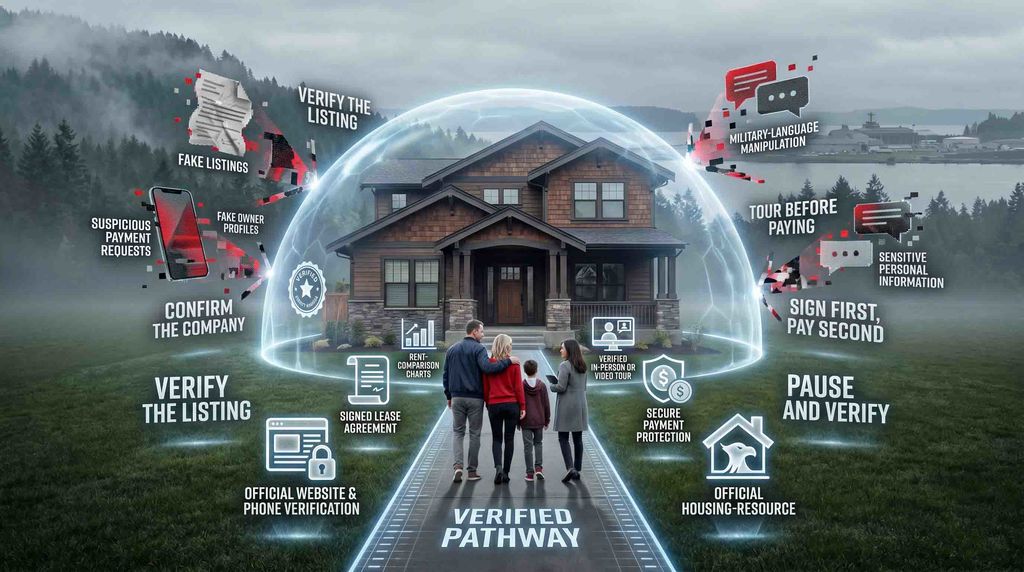
Military renters are especially vulnerable because PCS timelines create urgency.
Before sending money:
- Confirm the listing through the official property manager or owner
- Compare the rent to similar homes nearby
- Ask whether the home can be shown by a verified representative
- Avoid sending money before signing a legitimate lease
- Use official housing resources when needed
- Be careful with anyone using military language to create trust
JBLM’s Housing Services Office provides housing resources, local housing information, and support for service members during housing transitions. That makes it an important starting point for military families trying to verify options before committing money.
How Civilian Renters Can Protect Themselves
Civilian renters relocating into the South Sound face many of the same risks.
Before applying or paying:
- Search the property address online
- Check whether the same photos appear elsewhere
- Verify the management company
- Call using the phone number on the official website
- Avoid listings far below market rent
- Ask for written lease terms before payment
- Do not send sensitive personal information before confirming the listing is legitimate
If something feels off, pause and verify before moving forward.
What to Do Before Sending Money
Use this quick checklist:
- Have you confirmed who owns or manages the property?
- Have you reviewed the lease or written rental terms?
- Have you verified the email address and phone number?
- Have you confirmed the property is actually available?
- Have you avoided unusual payment methods?
- Have you compared the rent to similar JBLM-area homes?
- Have you checked whether the same home is listed elsewhere with different details?
If the answer to any of these is “no,” slow down before sending money.
Take the target off your back! Contact Operation Red Dot first!
How Operation Red Dot Helps Renters Avoid Scams
Operation Red Dot manages and advertises rental homes throughout the JBLM and South Sound region.
For renters, working with a legitimate local property management company helps reduce risk because the process should be clear:
- Verified listings
- Direct communication with the company
- Written application steps
- Documented screening
- Formal lease terms
- Secure resident processes
For military families moving under PCS pressure and civilian renters relocating into the area, that structure matters.
If you are unsure whether a rental listing is legitimate, starting with a local team that understands the JBLM-area rental market can help you avoid rushed decisions and expensive mistakes.
Helpful Resources
For more information, renters can review:
- FTC rental scam guidance and reporting information
- FTC rental scam data and warning signs
- JBLM Housing Services - Avoiding Rental Scams
- FBI Internet Crime Complaint Center for online fraud reporting
- Washington State Attorney General consumer protection resources
The FTC encourages consumers to report scams through ReportFraud.gov and provides guidance on rental scams, identity theft, and online fraud recovery steps.
Final Thoughts
Rental scams work because they target people under pressure.
That includes military families trying to secure housing before a PCS move and civilian renters relocating into a competitive South Sound market.
The best protection is simple:
- Slow down
- Verify the listing
- Confirm who you are paying
- Avoid unusual payment methods
- Work with legitimate local professionals
A real rental opportunity should survive basic verification.
If the listing or price seems too good to be true, it probably is.

Check out this article next