



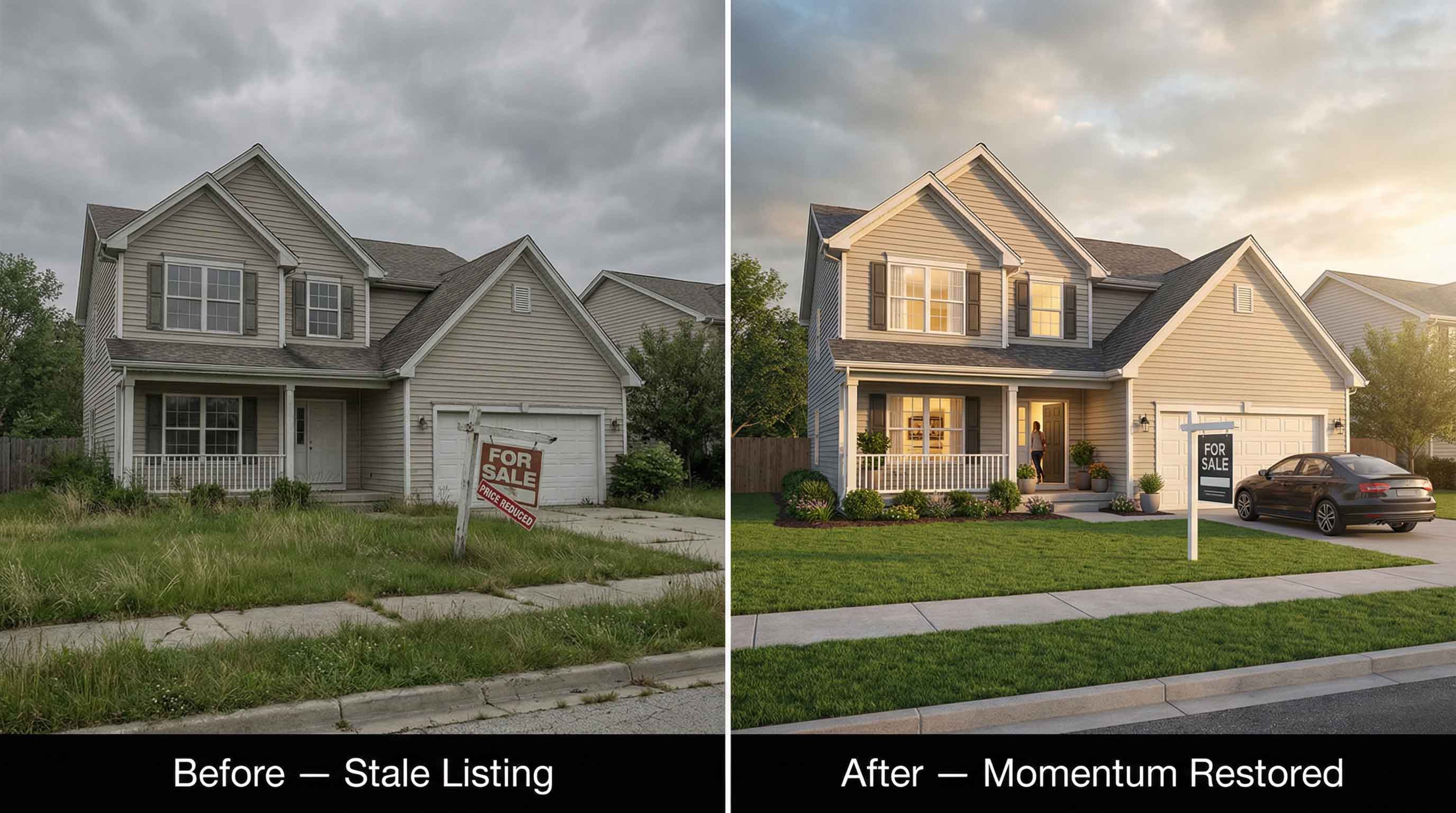
... And How Sellers Can Avoid Becoming “That Listing”
By James Marszalek, Owner & Designated Broker, Operation Red Dot
Every seller hopes their home will attract attention quickly. But most listings don’t struggle because the home is bad, they struggle because the market loses confidence.
In the South Puget Sound region, buyers move fast. When a home sits longer than expected, it quietly earns a label no seller wants: “What’s wrong with that one?”
Once that question takes hold, selling becomes harder, even if the home is well cared for and fairly priced.
What It Really Means When a Home Sits on the Market
When a listing lingers, it’s rarely because buyers didn’t see it.
Most buyers saw the home online early, compared it to similar listings, and made a quick judgment. If they didn’t act, the reason usually falls into a few predictable categories.
Why Homes Sit on the Market
Price Didn’t Match Buyer Expectations
Overpricing doesn’t just reduce showings, it changes buyer behavior.
Buyers begin to assume the seller is unrealistic, negotiations will be difficult, or better options exist. Even small pricing gaps can cause buyers to skip a listing entirely.
The First Impression Missed the Mark
Photos, presentation, and early showings matter more than many sellers expect.
If a home doesn’t photograph well, feels cluttered, or shows signs of deferred maintenance, buyers often move on without scheduling a second look. First impressions don’t come back.
Competition Was Better Positioned
Sometimes the issue isn’t the home, it’s the comparison.
If similar homes are better priced, better prepared, or better positioned, buyers choose the easiest option and ignore the rest.
Timing Worked Against the Listing
Markets move in waves. Listing at the wrong moment, or without a clear strategy, can cost sellers early momentum. Once momentum is lost, it’s difficult to regain.

Why “We Can Always Reduce Later” Is Risky
Many sellers believe they can start high and adjust later if needed.
What usually happens instead is that buyers watch and wait. Price reductions become visible online, the listing develops a history, and negotiating leverage quietly disappears. By the time the price feels right, the listing often feels risky.
I should also note that listing momentum fades consistently over time once a home is listed, it doesn't go up and down. Buyers aren't just sitting around, they see what the market has, makes decisions, and once we're written off, one less buyer is in the buyer pool for us. Reducing the price once the buyer pool has been thinned to almost nothing gives us no tangible advantage.
GET THE EDGE: BOOK A NO OBLIGATION CALL WITH US
How Buyers View a Stale Listing
Buyers don’t see a stale listing as neutral.
They start wondering why it hasn’t sold, what inspections may have uncovered, how flexible the seller is now, and whether the deal might fall apart later. Once doubt sets in, even strong homes can struggle.
How Operation Red Dot Helps Prevent Stale Listings
At Operation Red Dot, we focus on preventing listings from stalling, not reacting after they do.
That means pricing with buyer behavior in mind, preparing the home for its first showing rather than its tenth, and positioning the listing clearly against its competition. We create urgency through clarity, not pressure.
Our goal is simple: help the market understand the home quickly and respond with confidence.

Preparation Matters More Than Activity
More showings don’t always fix a stalled listing.
Often, the solution is sharper positioning, clearer pricing logic, and stronger early preparation. Homes that sell smoothly usually get it right at the beginning.
Early Momentum Protects Sellers
The best listings tend to share a few quiet traits: strong activity in the first two weeks, confident buyer interest, fewer concessions later, and far less emotional stress for the seller. That momentum almost always starts before the home ever goes live.
Selling Well Means Avoiding the Wrong Attention
The goal isn’t to attract every buyer.
It’s to attract the right buyers, at the right time, with the right expectations. Homes sit when the message is unclear. Homes sell when the strategy is clear.
A Smart Sale Starts Before the Market Decides for You
Once the market forms an opinion, it’s hard to change it.
If you’re thinking about selling this spring and want guidance that focuses on preparation, positioning, and early momentum, Operation Red Dot can help you avoid becoming “that listing,” and move forward with confidence.

Check out this article next