

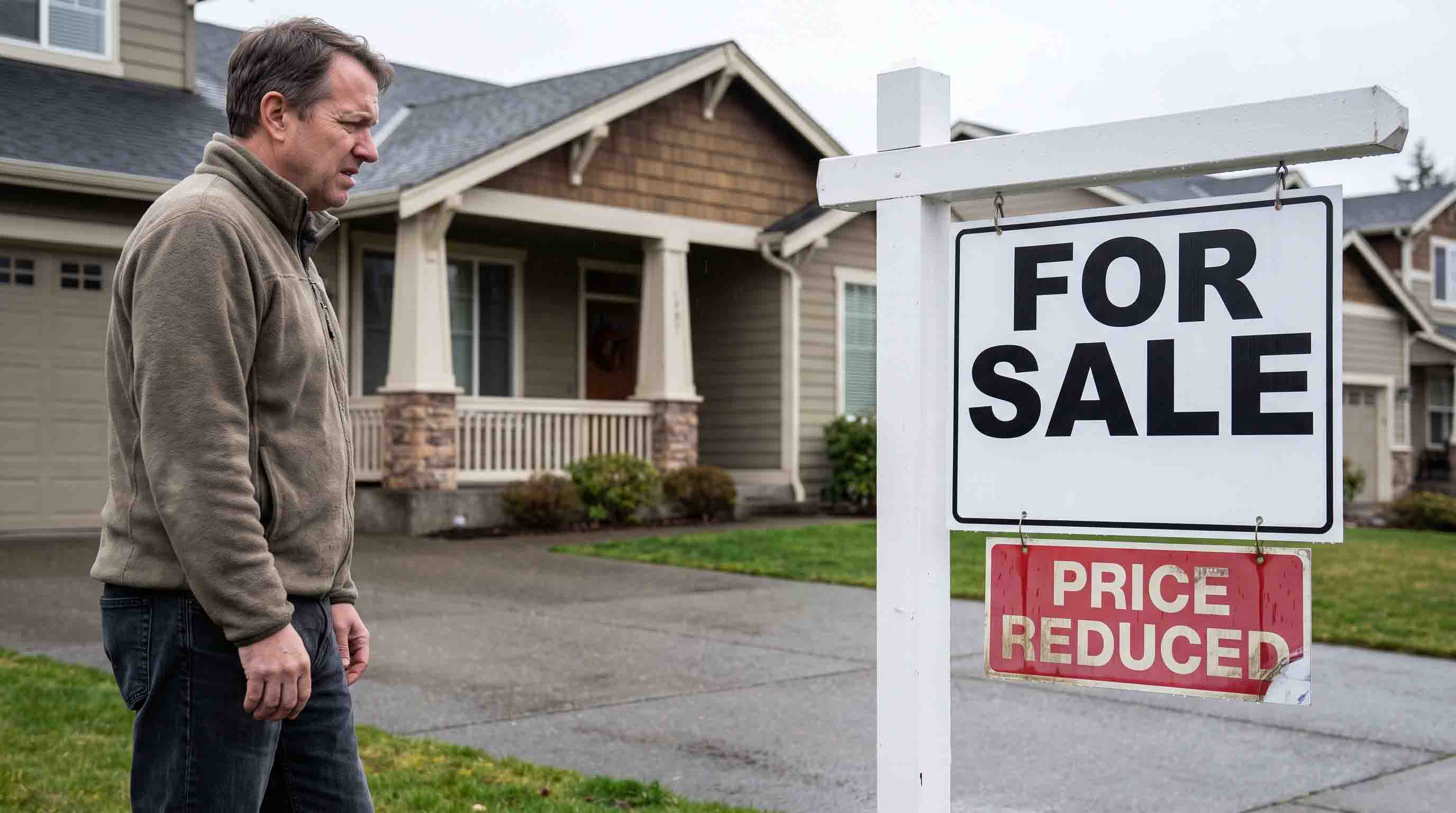
A practical diagnosis before you cut the price, relist, or consider renting
By James Marszalek, Owner and Designated Broker, Operation Red Dot
Your home has been on the market longer than you expected. Perhaps you have had few showings, but no offer, or offers that would leave you with far less money than planned. Every additional month can bring another mortgage payment, utility bill and question about what to do next. It is tempting to lower the price again just to get the situation behind you.
But a home that has not sold is not necessarily a home that cannot sell. Buyers are constantly aware of the high cost of homes, which reduces the overall traffic for tours. It can also make them extra sensitive to things like your home's condition, presentation, showing access, and competition. Those are different problems, and they call for different solutions. An expired or withdrawn listing should be treated as evidence to examine, not proof that your original plan was a failure.
Before you relist, reduce your price or turn the home into a rental, compare what each choice would really mean. That includes your likely cash from a sale, the cost of holding the property, repairs, rental income, financial reserves and your moving timeline. We advise against dropping the price out of novelty, meaning that the notion of "buyers aren't coming to see my house because the price is too high" is not actually likely to be the case. Sometimes a price drop can help reinvigorate the buyer pool, but in high rate environments, dropping the price $5k - $10k isn't going to tangibly move the needle for buyers. Renting can be valuable, but it creates new responsibilities and risks that you must plan to mitigate. This guide shows how to read your listing’s signals and select a practical next step without assuming that selling or renting is always the answer.
What You’ll Learn
How to diagnose a slow listing, decide when to review your strategy, compare five practical next moves, and test whether renting is financially and legally realistic.
Decision Snapshot: What Should You Do First?
- Few showings? Recheck price positioning, photos, exposure and access before assuming the home itself is the problem.
- Showings but no offers? Study buyer feedback about price, condition, layout and competing homes.
- Thinking about renting? Compare net sale proceeds with realistic rental cash flow, reserves, repairs and landlord risks.
Local Market Reality: Buyers Have More Choices
Northwest Multiple Listing Service reported 25.2% more active listings across its service area in October 2026 than one year earlier. Pierce County active inventory increased 19.7%, while the median combined residential and condominium sale prices in Pierce and Thurston Counties were unchanged year over year. These regional figures show more competition for sellers, not what any particular home should be worth. The right comparison is with active competition and recently closed sales in your property’s price range and neighborhood.
"A slow listing gives you clues. The valuable question is not simply how far should I cut, but what would change a qualified buyer’s decision?" - James Marszalek

Start With What Your Listing Actually Told You
Ask your agent for a clear review of showing requests, online interest, feedback, price history, presentation and competing properties. Look at which homes attracted offers while yours remained available. Then ask what buyers were getting at the same price elsewhere.
Low inquiry volume can point toward price, marketing reach or limited access. Repeated showings without offers may indicate buyers are comparing your home with stronger alternatives, or are concerned about condition or future repair costs. Neither pattern proves one cause. The best next move depends on what the evidence supports. It's important to say again, there is a bit of nuance to this analysis. There's no definitive blueprint, but there are clear indicators. This means if we aren't taking the time to look at the data and feedback contextually, there's no way we can succeed.
“Before you reduce the price again, find out whether price is truly the obstacle.” — James Marszalek
Timing: The Four-Week Check and the 60-Day Conversation
James uses roughly the first four weeks as an early review point. When tours, inquiries or offers fall well below expectations, that is a reason to investigate quickly. If the response still has not improved, a backup path should generally be part of the discussion by around 60 days. These are flexible operating checkpoints, not automatic deadlines or guarantees. Property type, season, price and local activity matter.
If the home is vacant, calculate the cost of waiting. Mortgage payments, insurance, utilities, yard care and maintenance continue whether or not buyers visit. Compare that carrying cost with the likely result of a measured price change. An adjustment that looks painful on paper may cost less than several more months of uncertainty.
Five Possible Next Moves
Next move | When it may fit | What to check |
Improve the current listing | Price, photos, access or targeted repairs can be improved | Change something buyers will notice, then measure response |
Withdraw and relaunch | The presentation or strategy needs a genuine reset | A fresh date alone does not solve the original problem |
Sell at a clearer financial floor | You need equity or a clean exit and can quantify the net result | Compare concessions and carrying costs, not just list price |
Rent and hold | Rental economics, condition and long-term goals support ownership | Test vacancy, repairs and ongoing owner responsibility |
Rent temporarily or stay and reassess | You can wait or operate a rental for a defined period | Set reserve limits, decision dates and tenant/lease constraints |
When Renting Deserves a Careful Look
There are definitely upsides to renting in this market. Renting buys a seller’s time while the market corrects and improves. And it gives strategic power back to the seller while making some income along the way. However, renting is not the automatic fallback for a disappointing sale. It introduces financial, maintenance, tenant and legal risks that should be identified and mitigated before you commit. First, establish market-supported rent. Then subtract the complete mortgage payment, management and other recurring costs. Separately budget for vacant months, turnover and major repairs. Compare that picture with the cash you would actually keep after selling.
Reduce risk by confirming rental-ready condition, maintaining accessible cash reserves, selecting appropriate insurance, reviewing homeowner association restrictions and following applicable screening, lease and notice rules. Washington law has statewide rent-increase limits, and Tacoma and Olympia impose additional local rental requirements. Verify the rules for the address before advertising the property. Even with a manager, you remain responsible for ownership expenses and major financial decisions.
“Before you become a landlord, make sure you can carry the property through a vacancy or an expensive repair.” — James Marszalek
When the Owner Is Relocating
A new job, family change or Permanent Change of Station (PCS) or military relocation can leave little room to wait. An empty house still needs utilities, insurance, security and maintenance. If you are moving away from Pierce or Thurston County, ask who can coordinate vendors, respond to property issues and make decisions when you cannot be present. If you consider a temporary rental, remember that lease terms and tenant rights can affect when you can later sell with the home vacant.

Four Questions to Bring to Your Next Property Review
- What does current buyer response tell us, and what evidence is missing?
- What sale price range would leave an acceptable amount after payoff, repairs and transaction costs?
- What rent could this particular home earn after rental preparation, and what could go wrong?
- How long can I financially carry the home, and which risks am I willing to retain?
Bring your listing history, current mortgage payoff, maintenance history and move date. Red Dot can help compare the likely sale result against rental readiness and cash flow without assuming that either service must follow.
“Don’t make a decision with only 10% of the picture.” — James Marszalek
The Bottom Line: Diagnose Before You Decide
Your home’s unsuccessful listing is a reason to ask better questions, not a reason to rush. Sometimes a stronger presentation or realistic price will restart the sale. Sometimes renting for a defined period is worth considering. And sometimes waiting, without becoming a landlord, is the sounder choice. Use the One Page Sell vs Rent Decision Sheet or the Expanded Comparison Worksheet with a property-specific review. The goal is a decision you can support with evidence, not a reflexive price cut or a hurried rental.
Related Resources and Sources
- Northwest Multiple Listing Service, October 2026 Market Snapshot
- Washington Department of Commerce, Landlord Resource Center
- City of Tacoma, Renting in Tacoma
- City of Olympia, Rental Housing Code
- Operation Red Dot, What Homeowners Can Do When the Market Isn’t Where You Hoped It Would Be
- Operation Red Dot, How to Turn a Home You Didn’t Plan to Rent into a Strong Investment

Check out this article next