
What Owners Should Expect
By Steve Lynch, Director of Operations
Operational Oversight | Maintenance | Project Coordination
Rental maintenance gets stressful when one repair becomes a chain of decisions: who is responsible, what contractor is needed, what should it cost, and who keeps the work moving?
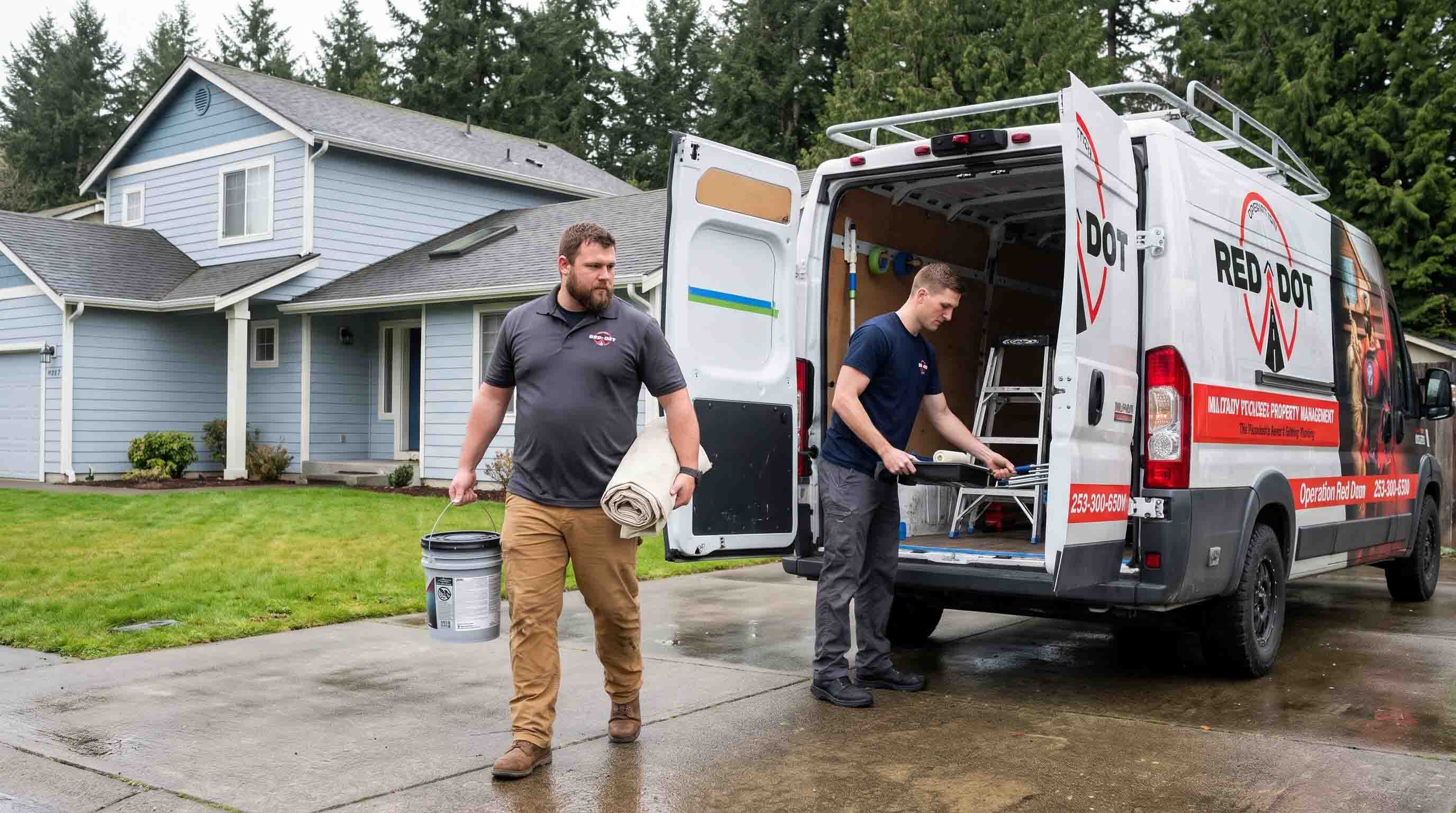
For owners in Pierce and Thurston Counties, especially those living elsewhere, those details can turn rental ownership into another job. Operation Red Dot handles routine maintenance, inspections, work orders, turnovers, and rental readiness in-house. Licensed work goes to qualified outside vendors, while larger scopes can move into separately approved project support.
Steve estimates a larger project can consume roughly 250 hours across coordination, accounting, technicians, inspections, and follow-up. For a remote owner, that time burden can matter as much as the repair bill.
“Our job is to turn a property’s repair needs into a clear plan, with reliable pricing and coordinated contractors, so owners can make informed decisions without managing the project day to day.” — Steve Lynch
What You’ll Learn
- What our maintenance team handles
- How approvals, inspections, and emergencies work
- When routine maintenance becomes project support
- How larger projects are coordinated
Decision Snapshot: Routine Maintenance or Project Support?
Situation | Typical Approach |
|---|---|
Routine repair or handyman need | Normal maintenance process |
Licensed or specialty work | Coordinated with an appropriate outside contractor |
Normal property turnover | Maintenance team coordinates rental-readiness work |
Larger turnover, repair, renovation, or restoration | May move into separate project coordination |
Approximately $10,000+ in work or about five or more vendors | Often signals a project |
Insurance-related repair | Usually requires additional project support |
Emergency threatening people or property | Stabilize first, then coordinate next steps |
These are guidelines, not rigid rules. Complexity, insurance, permits, HOA requirements, and the number of trades can change the approach.

The Local Reality: Small Problems Can Become Expensive Ones
Western Washington homes face moisture, drainage, moss, aging roofs, HVAC systems, trees, and seasonal weather. Red Dot has seen roof inspections catch failing systems early, while routine moss treatment and gutter cleaning can help prevent larger repairs.
Maintenance Starts Before the Tenant Moves In
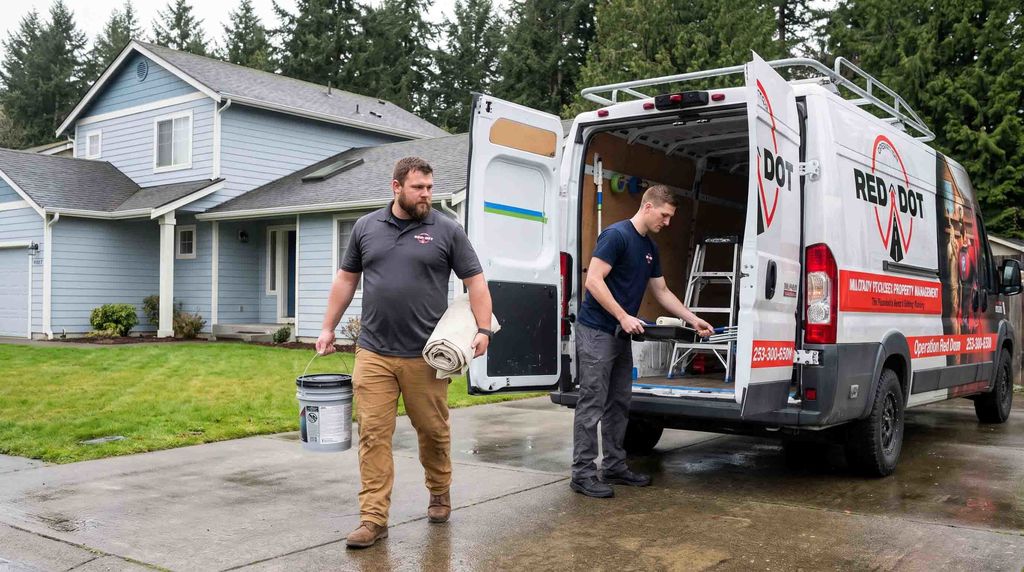
Before management begins, Red Dot evaluates condition and rental readiness. As James often puts it, the goal is to “bulletproof the house” by addressing problems most likely to create trouble later.
Priorities are simple: safety, health, and occupancy first; function second; cosmetics third. The goal is not to renovate everything, but to protect reliability, marketability, and rental performance.
What the In-House Maintenance Team Handles
Residents submit maintenance requests through Red Dot. The team evaluates urgency, liability, and whether the issue belongs to the owner, resident, or needs further investigation.
Residents are generally responsible for common consumables and resident-caused issues such as batteries, bulbs, filters, and certain clogged drains. For owner-responsibility work, Red Dot checks the owner-selected maintenance threshold. Work within that amount can generally proceed; larger costs return to the owner unless an emergency requires immediate action.
Routine repairs, handyman work, inspections, and turnovers may be handled in-house. Licensed electrical, plumbing, roofing, HVAC, and other specialty work goes to qualified vendors meeting Red Dot standards for licensing, bonding, insurance, and workmanship.
Emergencies: Stabilize First
Red Dot maintains a dedicated emergency line with 24-hour staff coverage. The on-call Maintenance Coordinator first protects people and property, then updates the owner on what happened and what decisions are needed next.
Inspections and Preventive Maintenance
Red Dot uses a rental-readiness inspection, move-in documentation, annual inspections, and turnover or move-out evaluations as appropriate. Owners may request an off-cycle inspection for a small additional fee.
Preventive maintenance varies by property and can include HVAC servicing, roof or gutter work, landscaping, septic inspections, seasonal preparation, or municipal requirements.
From Turnover to Renovation Project Support
A normal turnover may include minor repairs, cleaning, paint touchups, landscaping, gutter or moss work, plumbing maintenance, pressure washing, tree trimming, or HVAC servicing.
A larger scope may involve tenant damage, major flooring or painting, water damage, roofing, restoration, or several licensed trades. Around $10,000 in work or roughly five or more vendors can signal project support. Insurance claims, permits, HOA approvals, and complicated sequencing can also push work beyond routine maintenance.
Larger project support is always separately approved by the owner.
“A larger project is not just a bigger repair. Once multiple trades, schedules, approvals, and funding have to work together, coordination becomes part of the job.” — Steve Lynch
NO OBLIGATION: LET US HELP YOU WITH AN AFFORDABLE APPROACH
How Owner-Approved Projects Are Coordinated
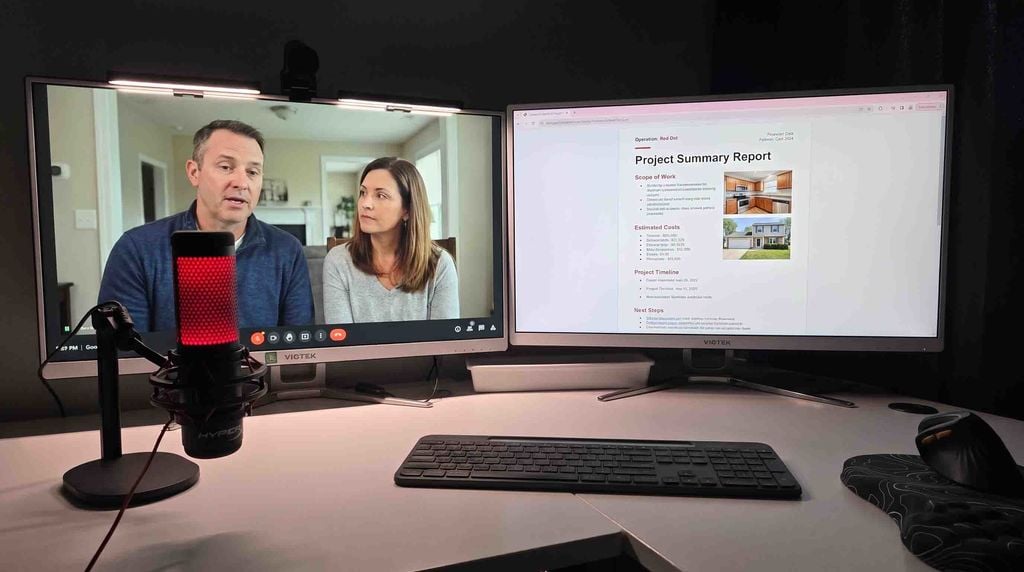
Red Dot may help define the scope, gather estimates, compare bids when requested, identify missing costs, coordinate permits or HOA requirements, sequence trades, manage access, monitor progress, track funding, and review completion.
An electrical-panel replacement, for example, may also require utility coordination, permits, drywall repair, and painting. A complete plan connects those pieces instead of leaving the owner to manage separate contractors. Red Dot’s accounting team can also track owner funding and vendor payments.
Owners Still Control the Big Decisions
Owners establish approval limits during onboarding and retain authority over larger expenses, renovations, capital improvements, insurance-related work, and major design or material choices.
Red Dot’s maintenance and project services are optional. Owners may use another qualified contractor or manage work themselves. Regardless of who performs it, Red Dot conducts a final inspection before the property moves forward to confirm safety, function, and rentability.
“The owner controls the investment decision. Red Dot manages much of the operational work required to carry it out.” — Steve Lynch
A 4-Question Test: Does This Need Project Support?
- Is the work likely to approach or exceed $10,000?
- Will it require roughly five or more contractors or specialties?
- Does it involve insurance, permitting, association approval, restoration, or complicated sequencing?
- Would managing it personally require substantial time or local oversight?
Several “yes” answers suggest routine maintenance coordination may no longer be enough.
Why This Matters for Remote Owners
Remote owners cannot easily meet contractors, inspect progress, or respond to unexpected issues. That matters for out-of-state investors, civilian owners relocating for work, and military homeowners leaving the JBLM area because of a Permanent Change of Station (PCS).
In one case, a Red Dot owner was deploying overseas after a renovation was left incomplete. Red Dot coordinated the remaining work and helped bring the home to rental standard so it could produce income while the owner was away.
Maintenance Protects More Than the Current Lease
A well-maintained property can be easier to keep rented, less likely to produce avoidable emergencies, and better positioned for sale. Sometimes the right answer is simply to restore function, protect the asset, and avoid unnecessary spending.
Final Takeaway
Rental maintenance is not just finding someone to make a repair. The harder part is determining responsibility, coordinating the right people, controlling approvals and costs, and knowing when routine work has become a larger project.
Operation Red Dot combines in-house maintenance, local property-management oversight, and separately approved renovation project support. Owners retain major financial decisions while Red Dot handles much of the coordination and local oversight.
If you own a rental in Pierce or Thurston County and want to understand how this approach could work for your property, start with a property review. (3rd consult link)
Check out this article next